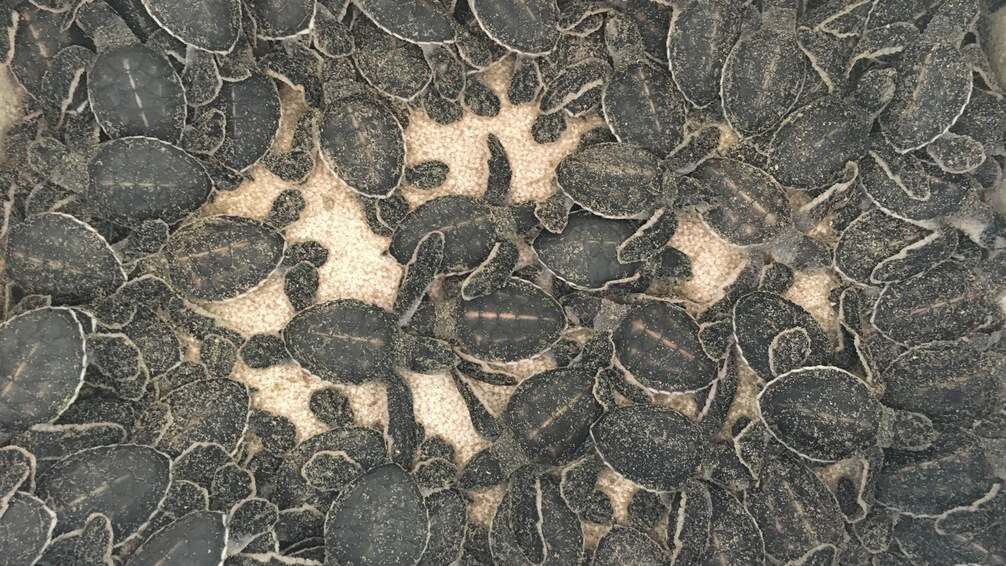
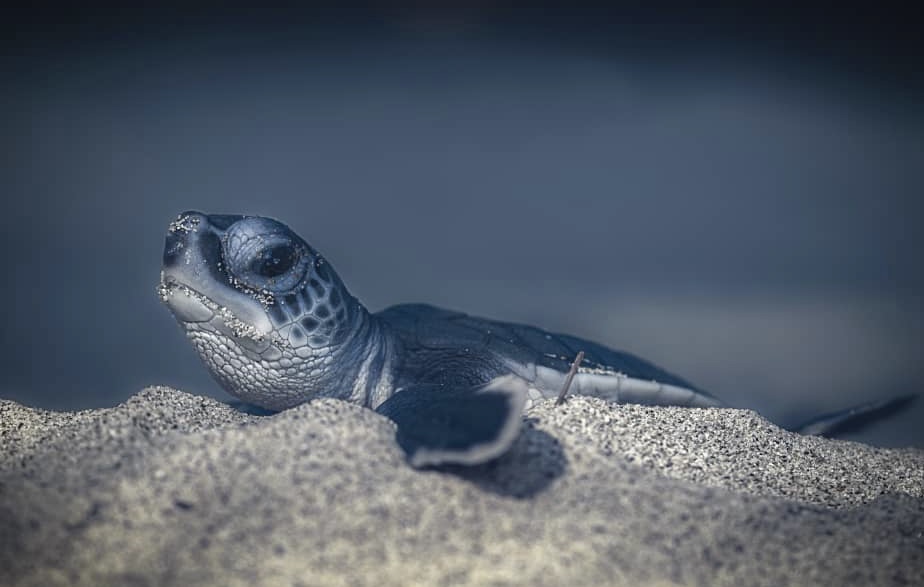
Sea turtles undergo ontogenetic shifts, or shifts in the habitat that occur during the life cycle that responds to changes in vital rates. The general life cycle starts from the adult females that dig nest cavities on sandy, ocean-facing beaches. After the incubation, the hatchlings emerge from the nests, crawl to the water and swim out to the open ocean.

HATCHLINGS
Sea turtles do not provide parental care to the hatchlings thus the flexible semi-permeable eggshell, associated membranes, albumen, and secrete mucus during oviposition are the only protection received by the eggs. The nesting beach is the incubator for hatchlings’ embryonic development. Nest conditions determine embryonic survival and the success of the clutch. During incubation, energy stored in the egg by the mother is transformed into embryonic tissue by growing from a few cells at the beginning into a hatchling. The nest micro environment affects hatching and emergence success, sex ratios, morphology, and locomotion performance of the hatchlings.
Turtle nests incubate for variable periods of time, and length of the incubation period is inversely related to nest temperature. Incubation periods shortened as the temperature and amount of sunlight increased Incubation of embryos generates metabolic heat which causes the temperature of the nest to typically increase above surrounding sand temperature towards the final stage of incubation.
When the incubation period is over, the eggs that successfully developed pip will hatch within a few hours or days of each other. The first few hatchlings to hatch will wait for most of their siblings to break free from their eggs before digging upwards, this is called synchronous hatching. The surviving hatchlings later enter the ocean and infrequently seen again until they reappear in shallow coastal habitats as immature adults to become permanent or semi-permanent residents. These immature turtles, with a curved carapace length of 35-40cm, were originally termed “yearlings”, which posed a huge challenge to the understanding of sea turtle biology.
NESTING
Sea turtles spend some time on land, where the time spent is affected by a few factors such as the reproductive readiness of the turtle, density of nesters, compactness of sand, and nesting experience of the turtle. The nests of the sea turtles are incubated to avoid predation. During incubation, the sex of the sea turtles can be affected by temperature.
Sea turtles spend most of their lives in the sea, but come to land to nest. Nesting turtles will come to the beach to nest, and the hatchlings will be incubated in a chamber. The temperature during incubation could determine the sex of hatchlings. Temperature-dependent sex determination of TSD in turtles was first identified among loggerhead turtles. Researchers then found that all sea turtle hatchlings adopt TSD. Cooler incubation temperatures were observed to produce more male hatchlings and warmer incubation temperatures produce more female hatchlings.