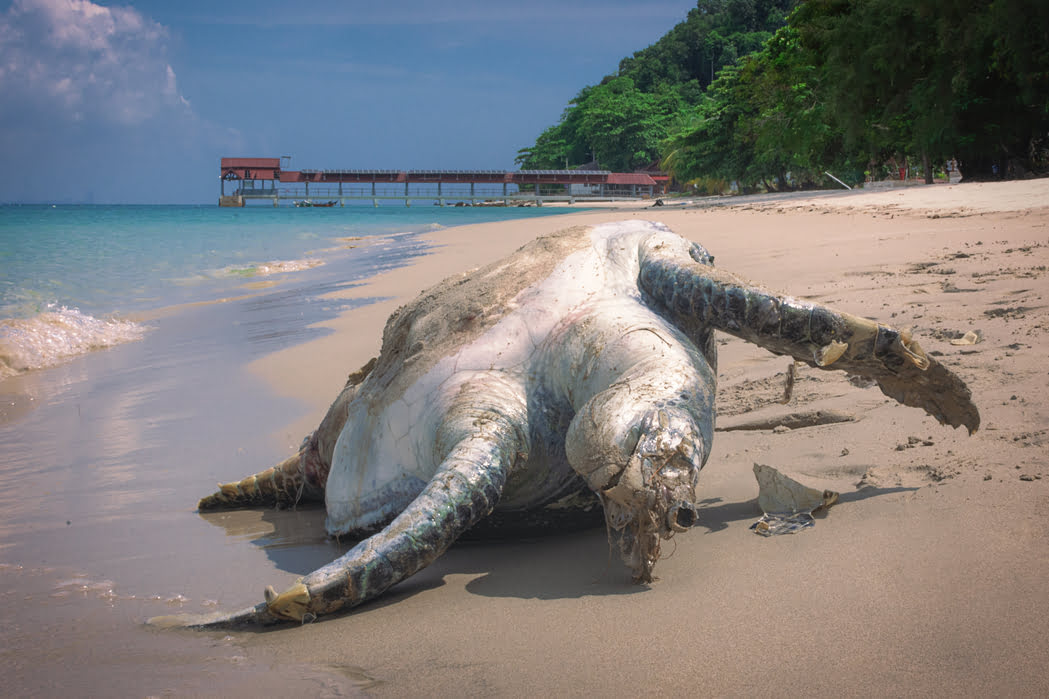
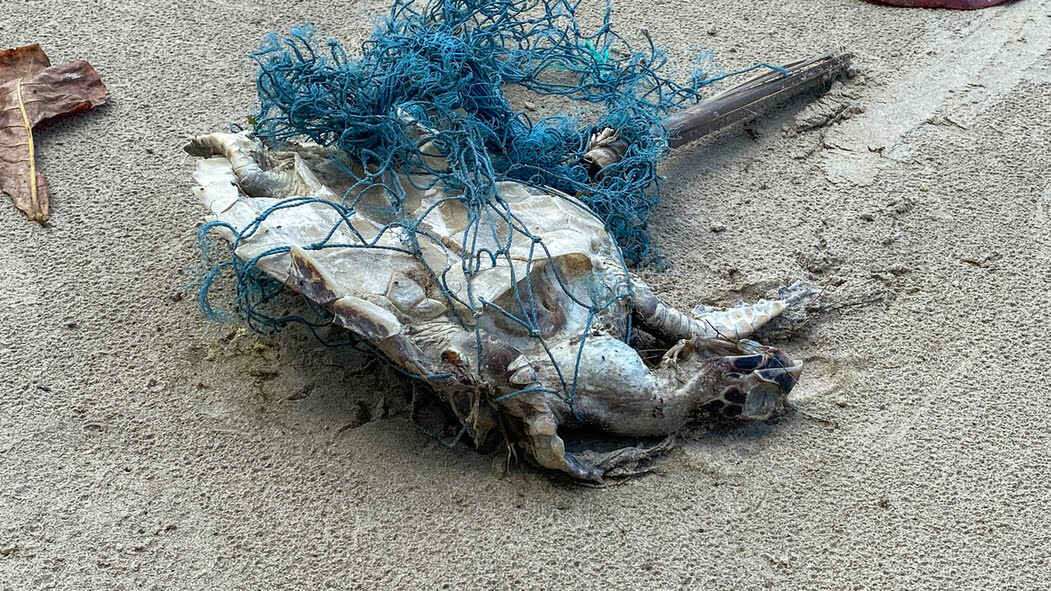
Sea turtles are highly migratory marine reptiles that play vital roles in maintaining a healthy ocean ecosystem. All sea turtles use different habitats and areas during their life cycle such as the seagrasses and the coral reefs. The marine sea turtles play important roles in maintaining a balanced food web, maintaining marine habitat, importance to beach dunes and also nutrient cycling in the marine ecosystem.

ECOLOGICAL IMPORTANCE
Green sea turtles are one of the larger species that feed on sea grasses other than dugongs. When green sea turtles graze on the seagrass, they help increase the productivity and nutrient content of seagrass blades by allowing older, upper sections of the blades to float away. Without constant grazing, the seagrass beds may overgrow and obstruct the water currents. Furthermore, it will shade the bottom, begin to decompose and provide a habitat for slime molds’ growth.
Hawksbill species plays an important role in coral reef areas. The hawksbill sea turtles feed on a variety of marine sponges. From that activity, the sea turtles help change the sea sponges composition and distribution in the coral reef ecosystem. By removing sponges from the reefs, the hawksbill turtles allow other species, such as coral, to colonize and grow on that area. The reason is because sponges compete in space with the reef-building corals.
Without sea turtles, the sponges may overpopulate the reef communities, thus limiting the growth of corals. Fun facts, when the hawksbills sea turtle rips the sponges, they expose the food to other marine organisms that are unable to penetrate the sponge’s exterior, thus making the sponges vulnerable to other predators.
The largest sea turtles, Leatherback sea turtles, can grow up to 9 feet in length and migrate across the entire ocean. They receive their energy and nutrition from small and gelatinous jellyfish. They have been known to consume up to 440 pounds of jellyfish per day which is nearly the weight of an adult African lion.
Through this feeding, leatherbacks play a vital role in the food chain as the top predator of jellyfish communities. Decreasing leatherback turtles will lead to a bloom of jelly fish communities in the ocean. In addition, with the declining fish stocks in the ocean, it will leave jellyfish with less competition for food, thus resulting in overpopulation of jellyfish.
Sea turtle eggs can directly or indirectly affect the species distribution of vegetation and stability of sandy shorelines. The unhatched sea turtle eggs provide limited nutrients in dune ecosystems such as nitrogen, phosphorus and potassium. Those nutrients allow the growth of vegetation and subsequent stabilization of beach dunes. The plant's growth helps to stabilize the shoreline and also provide food for other plant eating animals, hence able to influence species distribution.
PREDATION
Predation rates are exceptionally high during the hatchlings' early swimming efforts in relatively shallow waters and atop coral reefs, where predators are more likely to forage. The mortality rates of the first 2 hours after the hatchlings enter the ocean are around 40–60% and they are believed to be predated.
In Pulau Kapas, blacktip reef sharks are often observed in the shallow waters. Study shows evidence that some juvenile blacktip reef sharks may periodically feed exclusively on turtle hatchlings in locations of high hatchling abundance.